Inside Jasper Mutimer’s world: TikTok’s most thoughtful designer comes to London
28 Oct 2025

There’s always a faint whiff of scepticism that lingers around founders who’ve built their empires through social media. The assumption, often unspoken but keenly felt, is that virality and vision rarely coexist. Jasper Mutimer, the 25-year-old Australian designer behind his eponymous label, is familiar with that judgment. With a legion of followers across Instagram and TikTok and videos racking up millions of likes, Mutimer is a digital-era darling. You’re either in the cult of Jasper, or you’re not.
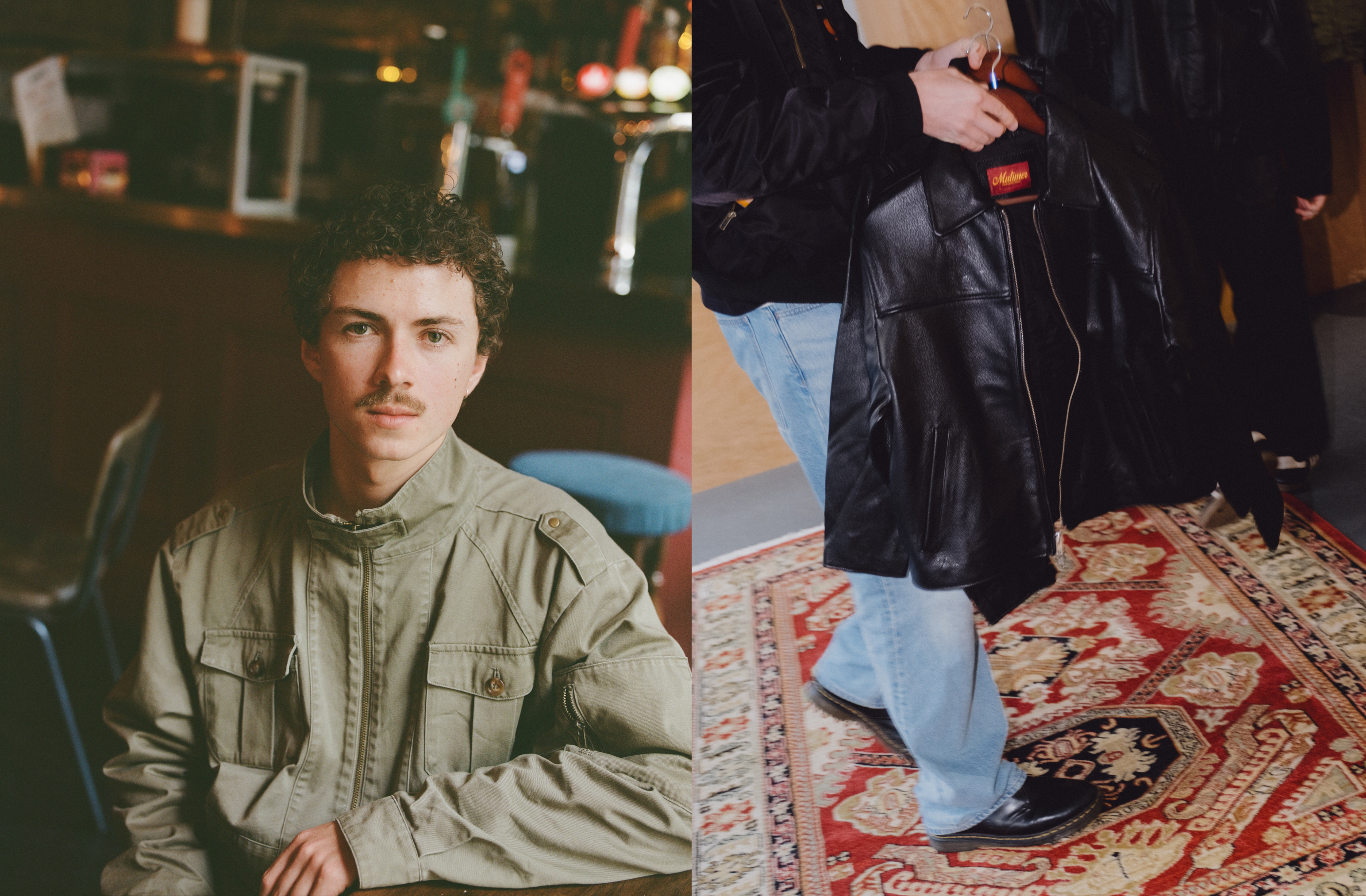
And yet, meeting him in London, his first-ever trip to the UK ahead of his Soho pop-up launch, Mutimer is a study in quiet charm. Soft-spoken, considered and polite to a fault, he seems more likely to offer you a cup of tea than a soundbite. Dressed, naturally, in Mutimer, he embodies his brand’s laid-back precision. Over a pint of Guinness, a rite of passage for any visiting Australian, we talk about design, ambition and the unlikely path that brought him here.
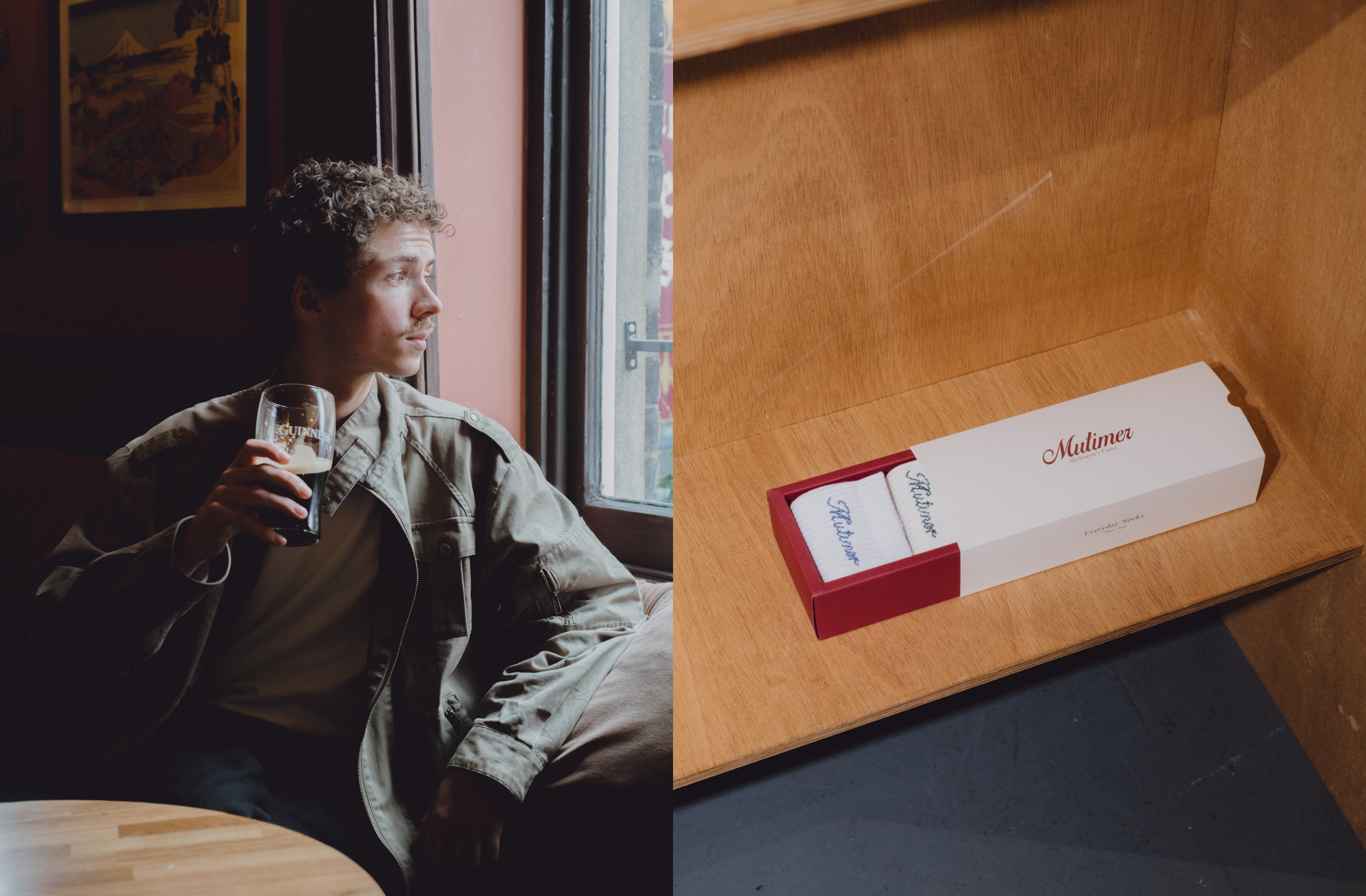
The confident young man on our iPhone screens, it turns out, wasn’t always so self-assured. “I was extremely shy,” he says, smiling. “I had a speech impediment, so I didn’t really like talking to people. I was a very anxious kid.” His father, an electrician, took it upon himself to toughen him up, insisting that Jasper hop out of the van and greet clients. “He made me talk to strangers,” he recalls. “Eventually, I just got used to it.” Speech lessons helped, too, until one day they told him he didn’t need them anymore.
That inwardness made him observant, design-curious before he even had the words for it. “I always liked design,” he says. “I went to a moving image museum in Melbourne once, and they had an architecture retrospective. I went with my grandma, and she bought me the exhibition book. From that point on, I wanted to be an architect.”
It didn’t quite turn out that way. After what he describes, with endearing self-awareness, as being a “little shit” during his teenage years, Mutimer eventually found himself enrolled in a double finance and marketing degree at Melbourne Univeristy, a decision he says was “strongly encouraged” by his family. “I’ve always liked art and drawing,” he tells me. “I’ve been drawing ever since I was a kid. But the rest of my family are all academic.”

If the university syllabus didn’t exactly ignite his imagination, it didn’t extinguish it either. He made a deal with himself: if he was going to study finance, he’d balance the spreadsheets with something creative. In 2020, in the middle of his second year, he launched Mutimer — the brand that would soon become his alter ego.
Like all good origin stories, it didn’t begin with instant triumph. When university ended, Mutimer moved back home, juggling self-doubt and determination in equal measure. But his conviction never faltered. “I actually made a PowerPoint presentation for my parents,” he says, laughing. “It was basically me pitching them: give me one year to make this work. If it doesn’t, I’ll get a job or go back to uni.” He never had to show it. One year, it turned out, was all he needed.
With no marketing budget to speak of, Mutimer took the most old-fashioned approach to digital growth imaginable: persistence. He spent hours on Instagram liking posts from followers of similar brands, leaving comments and quietly inserting himself into the online fashion ecosystem. “It could gain me, like, 15 followers a day,” he says, still half in disbelief. Slowly, the numbers began to climb.
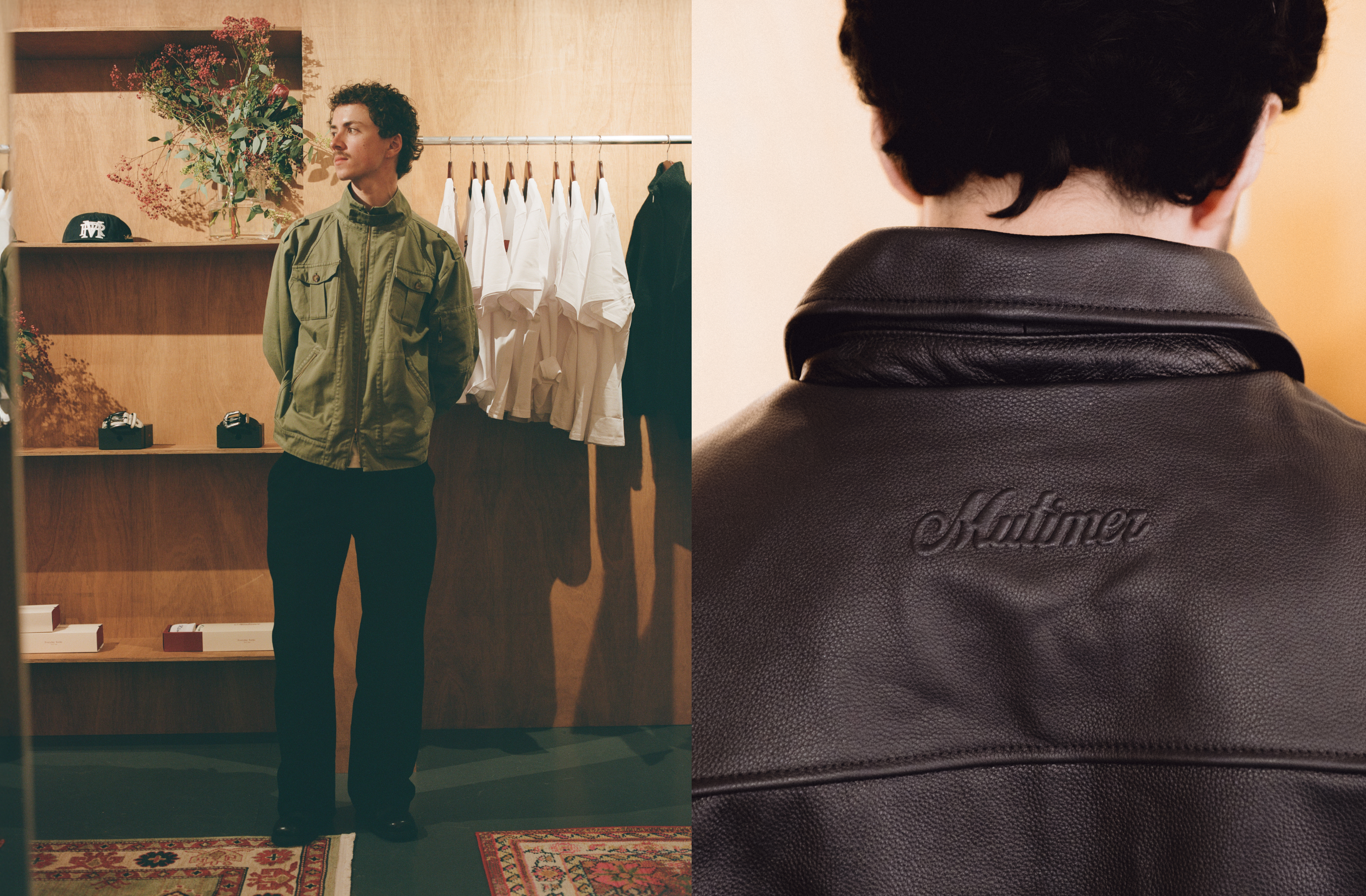
Then came the videos. What began as a brand showcase soon evolved into something more personal.* “It really changed when I started talking in the videos, not just showing the clothes,”* he says. For someone who once dreaded conversation, it was a full-circle moment. Friends teased him at first, but the charisma that had once been buried beneath shyness now translated into digital magnetism. The clothes — clean, conceptual, wearable — began to sell.
“At the start, it was just really hobby-driven,” he says. “Each collection video was an excuse to learn something new, stop motion, found footage, editing. It was all just creative play.” That same curiosity now informs his design process. His viral mid-century chair T-shirt, for instance, was inspired by a book his girlfriend gave him, The Anatomy of a Chair. “She knew I was into furniture design,” he says. “That’s how the T-shirt came about. Then the whole collection followed.”
Mutimer’s output is as unorthodox as his rise. There are no seasonal collections or 30-look drops. Instead, he releases around eight small, sharply edited collections a year, six to ten pieces at a time, each with its own visual universe. “I just design things I want to wear,” he shrugs. The result is something refreshingly rare in the digital fashion landscape: clothes that feel intentional. Each piece has space to breathe rather than being lost in the noise of overproduction.
As the business has matured, so too has Mutimer. Success, he admits, brings structure and with it, expectation. “It’s hard as the business grows,” he says. “There are more rules, like having a range plan. In winter, you’re meant to have a jacket, a knit, a hoodie, and a pair of pants. In summer, it’s T-shirts, short sleeves, shorts. I’ve never really liked range planning.” He pauses. “If you said to me, ‘Hey, next December you have to release a pair of shorts because it’s summer,’ it just feels forced. And forcing it feels worse.” His distaste for formula is, ironically, what makes Mutimer work. The brand has always thrived on instinct, not obligation. “I can always tell when something feels forced,” he says. “And I think people can too, it comes through in the design.”
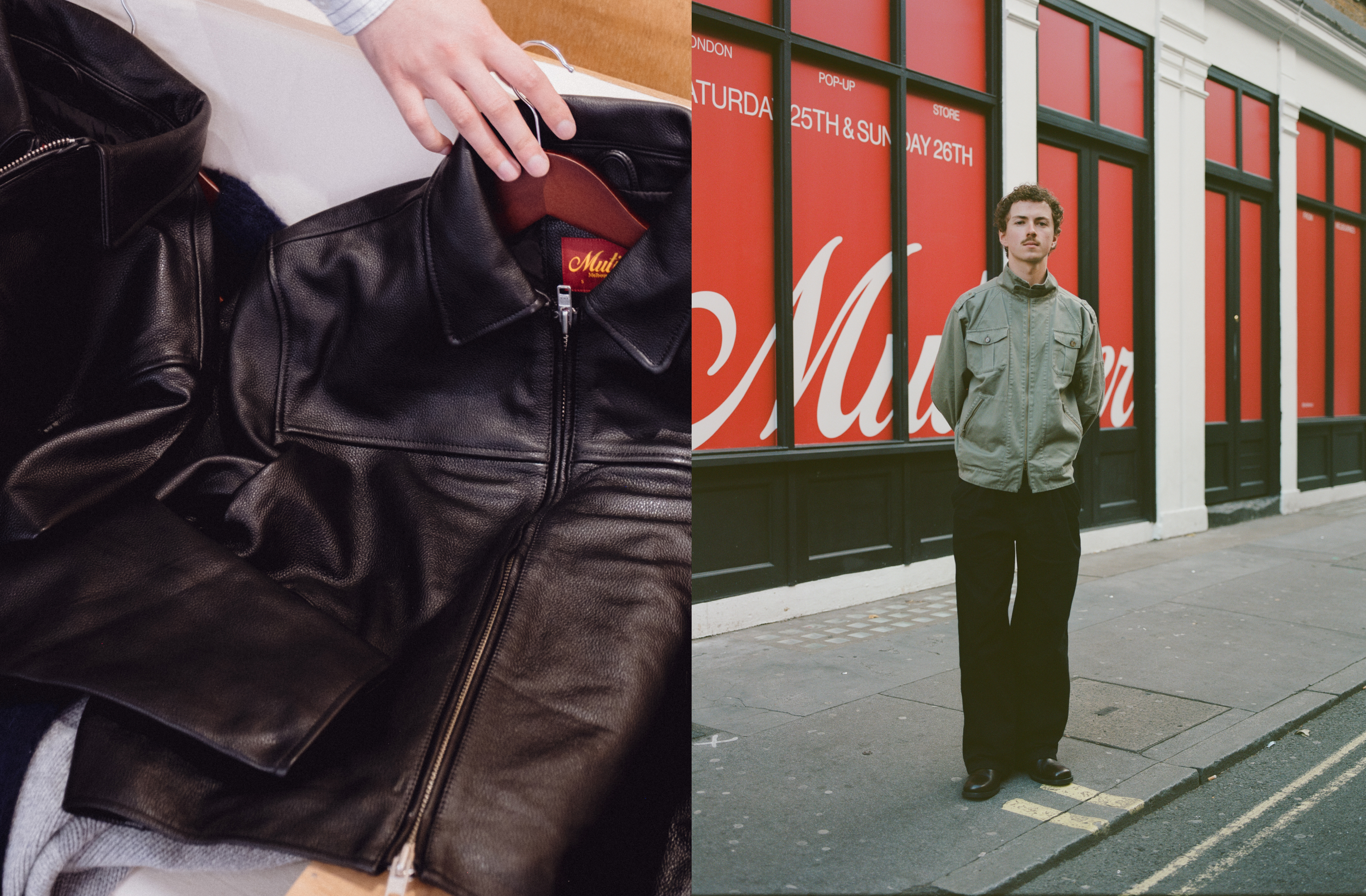
So what about the design of his latest collection and his soon-to-be first-ever UK debut? “I was inspired by the history of London’s Caribbean community,” he says. “I didn’t want this collection or the pop-up to feel like a foreigner’s idea of England. Big Ben, the London Eye… It’s so on the nose.”
Instead, Mutimer’s London capsule takes its cues from the Windrush Generation and from designers who’ve explored Britain’s cultural mosaic with similar sensitivity, Grace Wales Bonner and Nicholas Daley among them. The result is a collection that celebrates nuance over nostalgia: mohair jumpers in sun-warmed Caribbean tones, football-inspired T-shirts that nod to community and belonging.
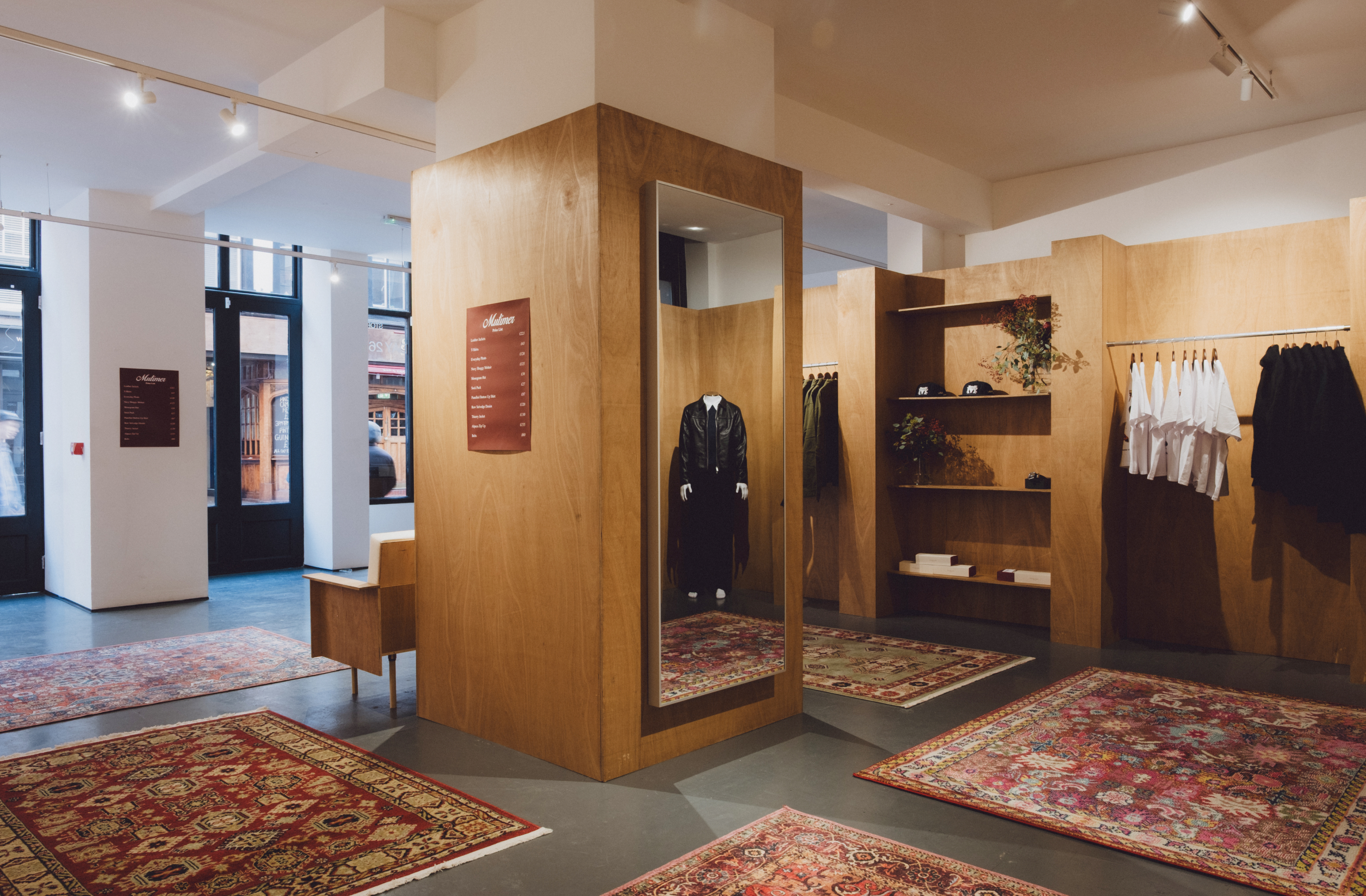
There’s also been careful thought and investment put into the fit-out. Having seen huge success with multiple pop-ups back home in Melbourne and Sydney, Mutimer was determined not to recreate the familiar formula of rails and white walls. “I didn’t want simple racks and nothing else,” he says. Instead, the Soho space will be warm and tactile, layered with wood tones and rugs, less concept store, more living room.
For his followers, the draw won’t just be the clothes but the designer himself. Jasper plans to be in-store, greeting and chatting with visitors throughout the pop-up’s run. When I ask how he feels about being so inextricably linked to the brand, a strategy that’s both a superpower and, at times, a risk, he doesn’t flinch. “People don’t want to buy from a faceless brand,” he says. “Otherwise it just feels like there’s a big corporation behind it.”
He’s aware of the pitfalls. Other influencer-led brands have seen sales stumble the moment their founder steps out of frame, but he’s comfortable with the responsibility. “Weirdly, I’ve almost come around to it,” he admits. “I’m really protective of the brand. I know some labels have hired a TikTok face, and it’s backfired when that person’s left. I think being the face is good. Because at the end of the day, if the product’s bad, it’s on me. And I like that ownership.”

With his pint of Guinness halfway down the glass, I ask what three pieces of advice he’d give to someone starting a fashion brand on social media. His answer is disarmingly simple.
“First,” he says, “you’ve got to love what you do.” The second comes quickly:* “Be consistent across everything. Design, operations, content — whatever it is, make it coherent.”*
The third takes a little longer, more considered.* “People usually fall into two camps,”* he explains. “Those who are self-critical, and those who aren’t. If you’re self-critical, and you pitch your idea to someone who’s negative about it but you still believe in it, then do it. Trust yourself. And if you’re not self-critical,” he smiles, “learn to be.”
At this point, the pint is dangerously low. Time for a final question: if we met in five years’ time, what would you have liked Mutimer to have achieved? The answer is swift. “I want a store in Melbourne, a store in London, a store in New York, a couple of stores in China, a store in Japan and a store in Korea.” So, in other words, a global takeover.
And with that, the Guinness is gone, and Jasper’s off to wrestle with lighting plans and rug choices. Not bad for a once-shy kid from Melbourne who thought he’d be an architect — he’s building something, after all, just of an entirely different kind.